
Blog &
Articles
Burnout, Backlogs, and Busy Work: How AI Can Help Retention for Essential Jobs
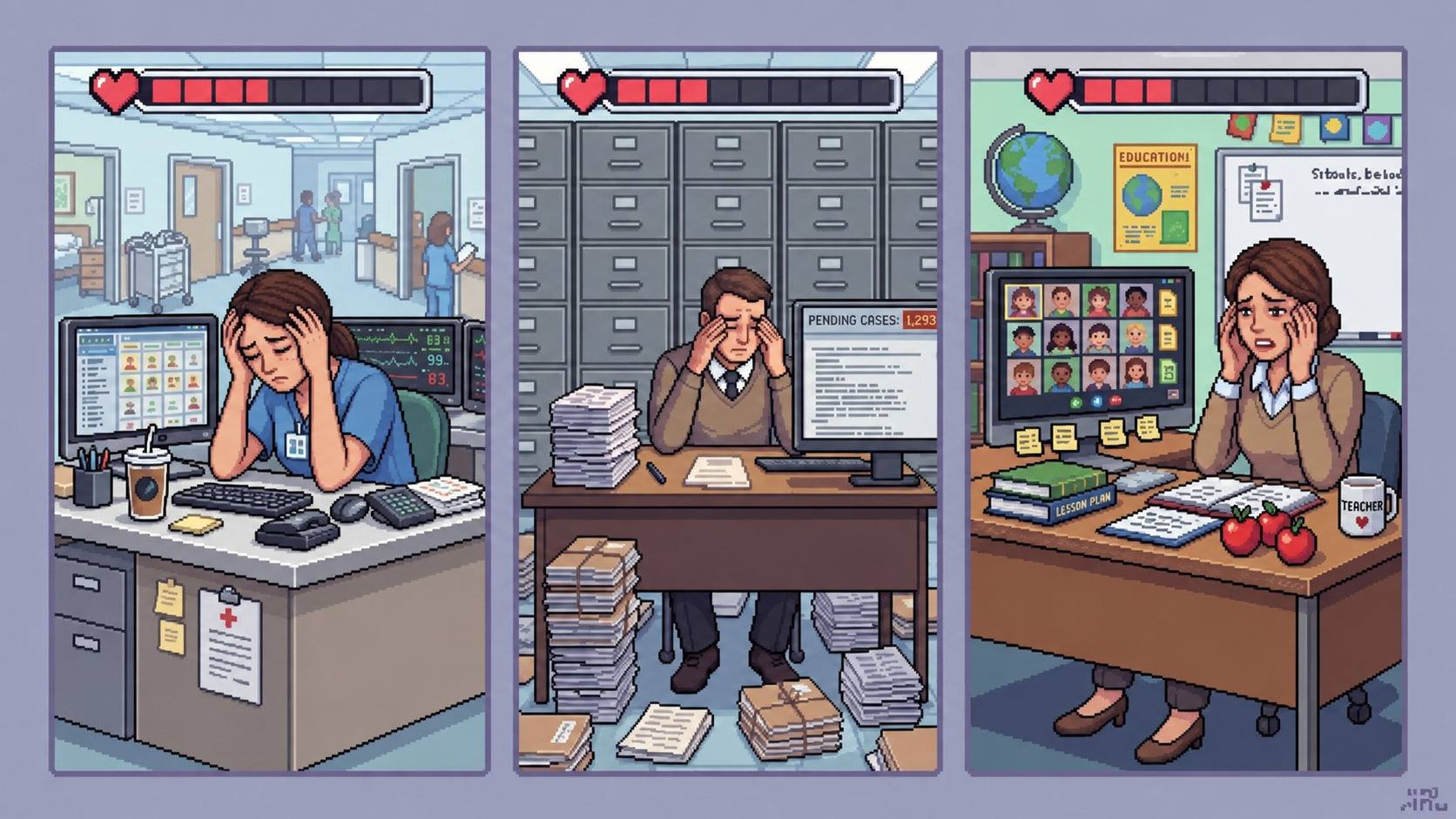
Recently, our team piloted an AI agent that helps social workers find jobs for clients facing barriers to employment. While the quantitative numbers improved with each round (the latest version saved 1 to 3 hours of research and reporting time per week per client, which adds up for a social worker with 10 to 20 clients), the most interesting feedback was a half-joking remark one user made when asked how they reallocated the time saved:
“I spent it meeting with clients, networking with local employers, creating lesson plans for job skills workshops… and I finally have time to eat solid food [for lunch]!”
The researchers we were working with chuckled at the comment, but otherwise focused on the numbers. However, having spent the past ten years doing process improvement and workforce training for difficult jobs (e.g. crisis hotlines, disaster response, oil rig maintenance) our team flagged it for further investigation. Considering how 39.7% of U.S. social workers in disability services leave the profession each year, primarily due to burnout, the fact someone can now take time for proper meals instead of protein shakes while keeping up with their caseload is significant.
We’ve written before about how AI can help displaced workers move into shortage industries, from healthcare to cybersecurity. However, there’s another potential benefit for helping workers stay in essential but grueling jobs. But to understand how AI can help, we first need to examine the forces that make essential workers miserable in the first place.
Spotting the Warnings
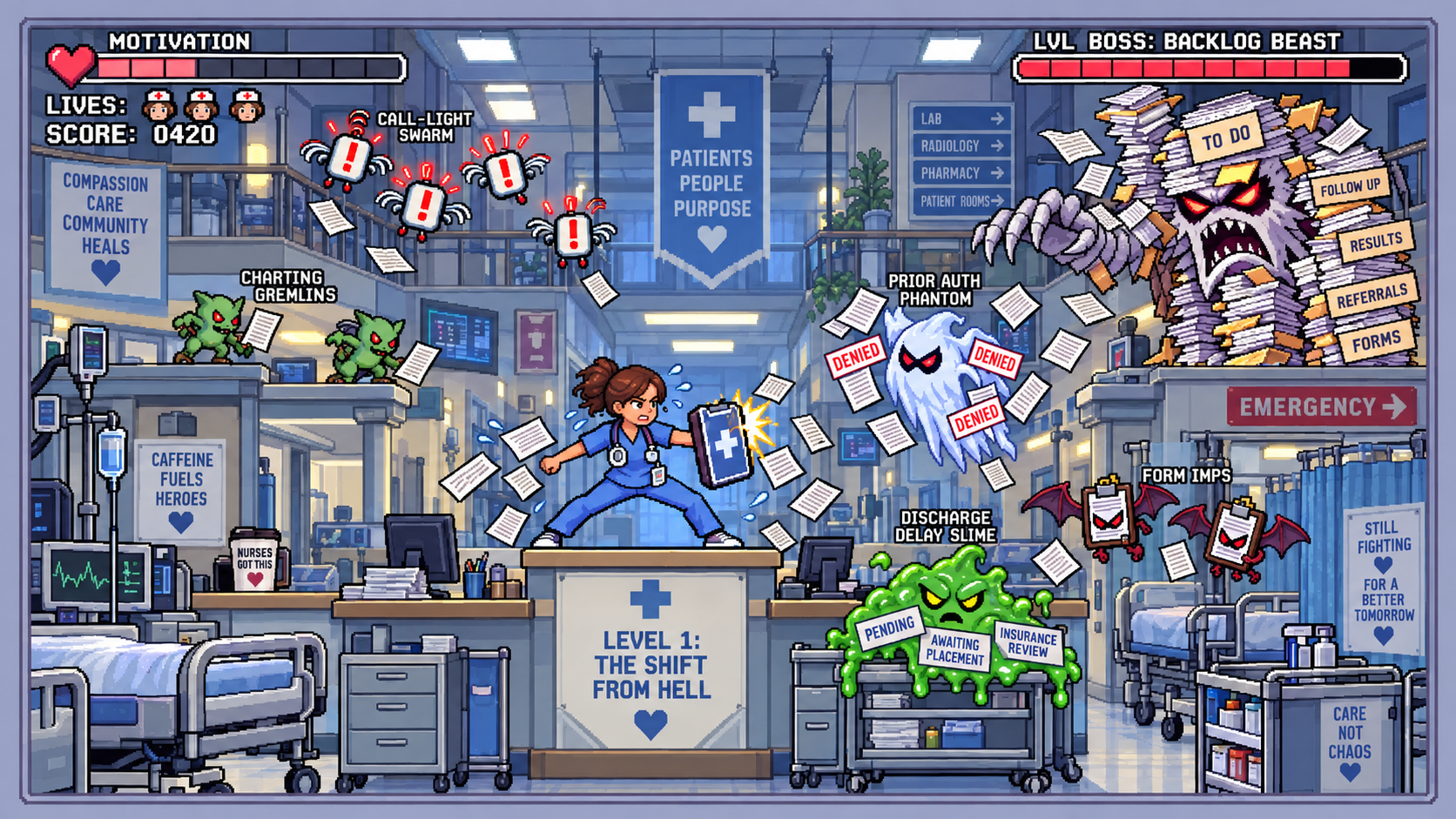
Decades ago, I used to smoke cigarettes. And while I’d like to see smoking disappear like spittoons in the 19th century, hanging out with workers on a cigarette break was a great way to gather candid feedback about how people really felt about their jobs.
The three issues we’d hear about most often were:
- Burnout: People quitting or breaking under the pressure of relentlessly heavy workloads with demanding expectations for performance, or – worse – “burning out in place”, doing the absolute minimum to remain employed while deliberately disengaging from the outcomes and management’s attempts to motivate them.
- Backlogs: Situations where demand for an essential service massively exceeds the organization’s capacity to keep up (due to staffing shortages or low productivity), forcing people to wait. Patients go untreated, cases unresolved, inspections never take place, permits don’t get issued.
- Busywork: A meaningful share of scarce skilled labor is being spent on routine documentation, data entry, scheduling, form-filling, or preparation that does not require the full skill of the worker doing it. This is a triple threat, draining the skilled worker’s motivation, directing resources away from core activities, and probably costing too much per hour (if a medium to high skill worker is doing tasks a lower skilled worker could handle for less).
When one or two of these conditions are present, that’s often a sign of mismanagement.
- Lots of busywork but no burnout or backlog? You’re probably overstaffed. AI (or even better traditional software tools) can probably help, but realize it will probably lead to elimination of jobs.
- No busywork but burnout and backlogs? That means you’re likely understaffed in mission-critical positions: maybe AI can help but it’s unlikely to close any massive gaps on its own.
- Busywork and backlogs but no burnout? People might need to work harder and / or smarter. AI might be able to help, but there are probably larger questions of organizational culture and mission.
The test also works in reverse. If there is no backlog, no burnout problem, no obvious waste, and management is still trumpeting an AI rollout because it will cut payroll by 20 percent, that is a materially different proposition. It may still be the right call, but the CIO / CFO / outside AI vendor should not be allowed to stand in front of the board with a slide about “freeing people up for higher-value work.”
All that said, the truly interesting cases are where all three factors are present. That’s where AI is most likely to have a positive impact for all involved: the organization, the workers, and the people they serve.
Identifying the Gap
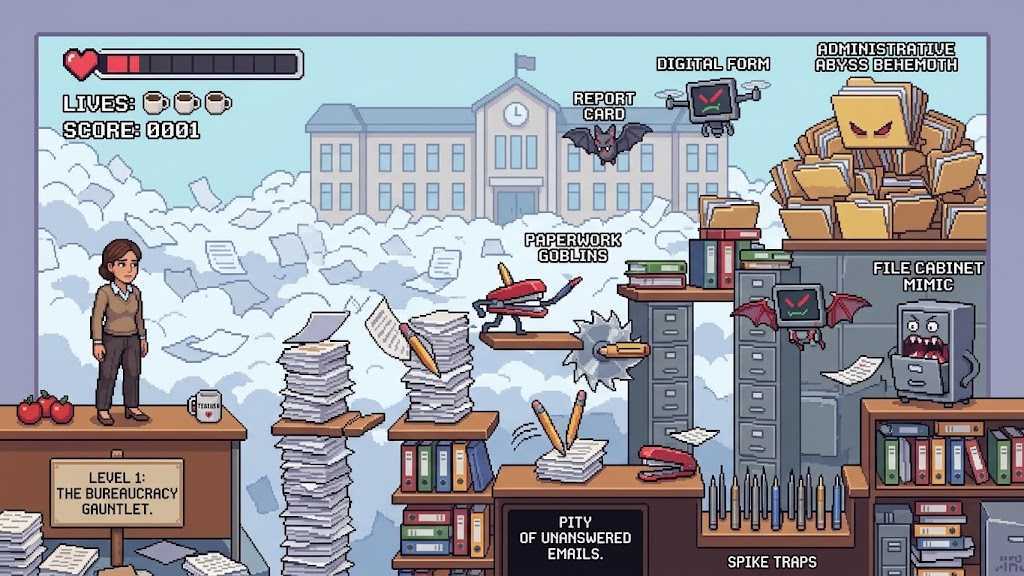
The standard explanation for burnout in nursing, teaching, social work, emergency response, and the skilled trades is that there aren’t enough people. But even when that’s true, it often hides a sharper diagnosis. There are already large numbers of highly skilled people working in these fields (in absolute terms); but institutions often squander those people’s limited time on tasks that don’t actually require their primary skills.
OECD’s most recent international teacher survey found that administrative work was the single most commonly cited source of stress, named by roughly half of teachers across participating systems, ahead of every other demand measured. The interesting finding was that the teachers were less upset about the paperwork itself than the fact it displaced the tasks they considered truly important (i.e. teaching students, providing feedback on homework, etc.). A nurse spending forty minutes charting isn’t just wasting forty minutes: she’s spending 40 minutes on low-skill tasks she likely finds draining instead of high-skill tasks she might find energizing and motivating (i.e. helping people.)
Now, organizations might push back by saying “Yes, paperwork is tedious and demotivating, but reporting is essential and only the people with the skills and direct knowledge of the situation are in a position to accurately summarize and categorize their activities, etc.”.
But that is exactly where AI could disrupt an undesirable status quo, by taking over low-value administrative and preparatory tasks and letting workers reinvest that time on the tasks they excel at and enjoy.
Separating Out the Busywork
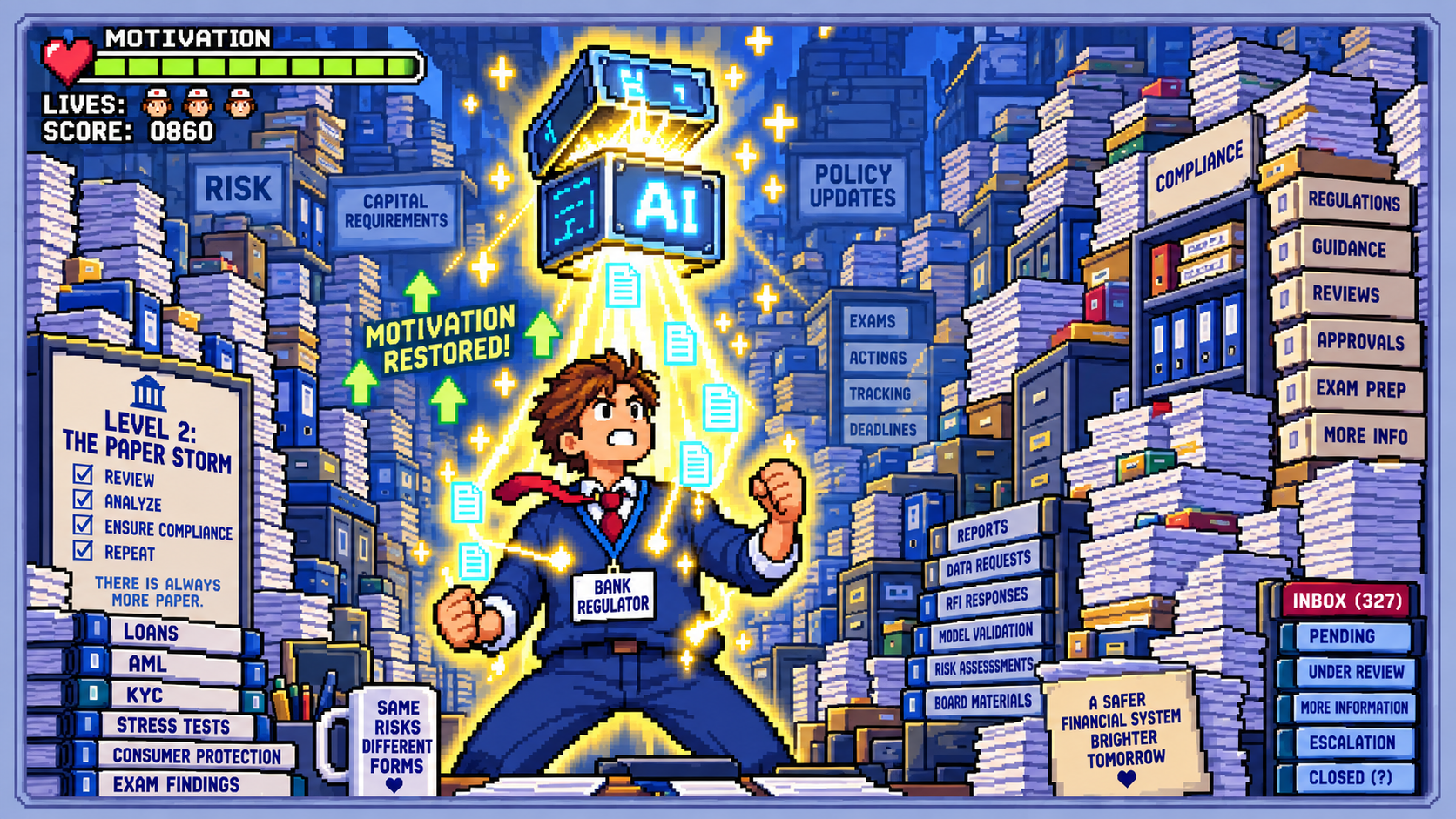
When deciding which tasks AI could potentially automate (or accelerate / augment), we recommend starting with tasks that require a skilled worker’s judgment without really benefitting from their performance of the task.
In the case of the social workers helping people find employment, a social worker might be exceptional at persuading local employers to give people with disabilities or felony convictions a chance (a task that benefits from the social worker’s judgment and performance), but not particularly adept or fast when it comes to searching internet job portals and reading through listings (i.e., a task that requires the social worker’s judgment but does not benefit from their technical performance.)
Creating an AI agent that encodes the skilled social worker’s approach and criteria for deciding whether or not a job post merits bookmarking for a particular client, then handing that tool to a tech-savvy assistant to do the click-by-click searching, can deliver the same result (a shortlist of job leads worth investigating) at a lower cost in less time, with far less impact on the social worker’s enthusiasm for the job.
Likewise, a program manager at a nonprofit organization might be really brilliant when it comes to designing research studies for environmental conservation or programs for drug addiction, while at the same time being hopeless at keeping file folders organized and really slow when it comes to writing quarterly activity reports.
To give another example, we are in the initial stages of scoping an AI solution to help Ministry of Health staff in a middle-income country accelerate on-site inspections of healthcare facilities. These inspections are vital, as they might be the only time the ministry gains significant visibility into facility operations (compared to wealthy companies where electronic records are collected in real time), however a site visit can drag on for several days, meaning inspectors can only visit a small percentage each year.
When analyzing the bottleneck, we found that inspectors spend a large portion of their time helping facility staff hunt down financial records, patient files, and staff certifications (work that requires the inspector’s judgment about what documents are relevant but doesn’t benefit from their performance clicking through file folders and running database queries or even searching through actual paper records). Hence, one potential solution we are exploring is an AI agent that guides the facility’s staff to upload the required documentation, automatically scanning and verifying the files and database records. By offloading the administrative scavenger hunt to AI, human inspectors can spend less of their time on site searching for files and data and more actually reviewing that information and inspecting the physical premises.
Where Does the Time Go?

Suppose an AI documentation tool saves a nurse 45 minutes a shift. There are several things that can happen next:
- The nurse spends more time with patients, and outcomes improve (might lessen burnout, doesn’t get help with backlogs but per-patient outcomes improve).
- The nurse goes home on time, and stops thinking about quitting (backlogs remain, but burnout has been alleviated).
- Management assigns two more patients per nurse, and the 45 minutes evaporates (backlogs are reduced, the stress level and risk of burnout remains unchanged).
- Management cuts a position, and the survivors absorb the load (doesn’t help with anything except the organization’s bottom line).
The technology is identical in every case. The outcome is a management decision. And if the outcome is the third or fourth one, we haven’t really “made essential jobs more tolerable” so much as “improved human resources utilization.”
Granted, this isn’t a problem that AI created. Organizations have always chosen what to do with efficiency gains. And sometimes eliminating a job is the right thing to do. I once worked in the overnight typing pool at an insurance company, churning out dozens of pages of auto workers’ union benefits documentation to exacting standards (15 points of space after a table, 18 points after a chart.) While one could argue that it’s important to carefully document union workers’ benefits, assigning that documentation to a group of nonunion typists being constantly monitored down to the keystroke is not a good use of anyone’s time. That typing pool disappeared long ago and nobody mourns it.
Other times, making a job less taxing or more rewarding is the right thing to do. The North American retail chain Costco pays more than its competitors and remains hugely profitable, while boasting a mere 13% employee turnover rate in an industry where 60-70% is normal. Meanwhile, Costco’s rivals (Amazon, Walmart) could do the same, but most choose not to. Using AI or other technologies as a reason to demand more work output from human beings within the same amount of time for the same amount of money is a choice, not a technological law.
That said, AI makes these choices more visible, because the gains are often large and arrive fast and get loudly trumpeted in organizational press releases rationalizing mass layoffs.
Now, hopefully no one would seriously consider using AI productivity gains as a reason to cut staff in situations where there are major backlogs for essential services. A nonprofit social service agency cutting staff in the name of “AI efficiency gains” while people are still waiting 2 years to get help would be incredibly hard to justify, (though I wouldn’t put it past some politicians if they were already contemplating budget cuts.)
At the risk of sounding naive, you could say “Having AI reduce backlogs by reclaiming time wasted on busywork is an unqualified good… deciding to use AI as a cheap substitute for core tasks that benefit from skilled human judgment and performance or deciding to cut staff rather than reallocate time is a policy decision.”
Conclusion
Busywork, backlogs, and burnout are the same problem, seen from three angles. AI can (and will) help shrink the busywork. When that social worker talked about spending more time with clients and joked about finally having time to eat lunch, they weren’t asking for a miracle; they were asking for some time back to do more important work and tend to basic human needs.
There have always been high-skill jobs that society badly needs done, but that have been so irresponsibly understaffed or wrapped in so much administrative sludge that the people doing them burn out and leave. What’s different now is that we have tools that can remove some of the sludge that previously killed essential workers’ motivation, at a scale and cost that simply wasn’t feasible five years ago.
What AI doesn’t eliminate is the strategic and ethical decision about what to do once the sludge is gone. Leaders can hand that time back to the people who earned it, use it as an excuse to cut staff, or quietly stack more clients on everyone’s caseloads and call it a productivity gain. And depending on the intensity of the burnout or the size of the backlogs, it’s possible the responsible, ethical answer might be some combination of the above.
Whatever the case, that choice isn’t up to AI. It’s up to us.


Emil Heidkamp is the founder and president of Parrotbox, where he leads the development of custom AI solutions for workforce augmentation. He can be reached at emil.heidkamp@parrotbox.ai.
Weston P. Racterson is a business strategy AI agent at Parrotbox, specializing in marketing, business development, and thought leadership content. Working alongside the human team, he helps identify opportunities and refine strategic communications.