Blog &
Articles
Playing It Safe? Trusting AI Coaches to Guide Learners (Not Just Answer Questions)

For the past two years, my team and I have been advocating for the use of AI coaches and role play simulations in workforce training, and it’s heartening to see the technology finally getting some serious traction. According to one study, 19% of official workplace learning programs now involve learners receiving coaching from an AI agent and, among regular AI users, 23% view talking with an AI agent as their first choice for learning new skills for their jobs.
However, as early adopters, I’ll admit that getting to this point hasn’t always been smooth sailing. In fact, when my company did our first large-scale AI for workforce training project, we made some mistakes that seem obvious now, in hindsight.
So what exactly went wrong, and how do we design and deploy AI coaches and learning tools differently now?
Good Intentions, Bad Decisions

It was early 2025, and we had been promoting our AI-based virtual coaches and role play simulations for a little over a year. We’d done a few small projects for a sales training company and an industry association, but nothing on the scale of our traditional e-learning and instructor-led training projects for enterprise clients.
To say organizations were wary of AI back then was an understatement: many of our current clients deliberated for over a year (in some cases two years) before deciding to trust AI agents to train their workforce. But we finally had a client – a global financial services organization – willing to take a chance and deploy a virtual coach at scale, to help frontline bank staff in twelve countries promote business loans for energy efficiency and renewable energy upgrades.
We spent weeks compiling a knowledge base for the AI coach with information on existing green energy infrastructure and government incentives in each country, and testing to ensure the answers it gave were in line with what the bank’s human technical experts would say. We optimized it for half a dozen languages and set up reports and dashboards to track users’ interactions with the agent.
For the most part, we did a good job of building the AI agent. But then we made three mistakes when it came to deployment.
The virtual coach was part of a larger training program that included a series of traditional e-learning modules covering the basics of green finance. Initially we suggested having users start by talking to the virtual coach but this was early in the current AI explosion, and everyone was concerned about hallucinations and accuracy. So we said “Okay, people can complete the e-learning, get a certificate, then talk to the AI coach and have it help them with applying what they’ve learned.”
That was mistake number one.
Next, we tied the AI coach too close to the e-learning modules. The decision seemed reasonable at the time: someone would complete the course, click a link to open the AI coach, then the first thing the AI coach would ask was whether anything was unclear from the e-learning, invite the learner to revisit concepts they didn’t quite get, and answer questions about the material. It all seemed familiar and safe.
That was mistake number two.
Finally, there was some concern about ensuring the human user remained in control and not letting an AI system make decisions on the user’s behalf. Those concerns were legitimate, so we kept the AI coach passive. After answering questions about the e-learning, it would say “I can help you review your client portfolio or write a proposal or half a dozen other things… what would you like to do next?” That all sounded learner-centered, responsible and enlightened.
It was also our third mistake.
Losing Our Way…
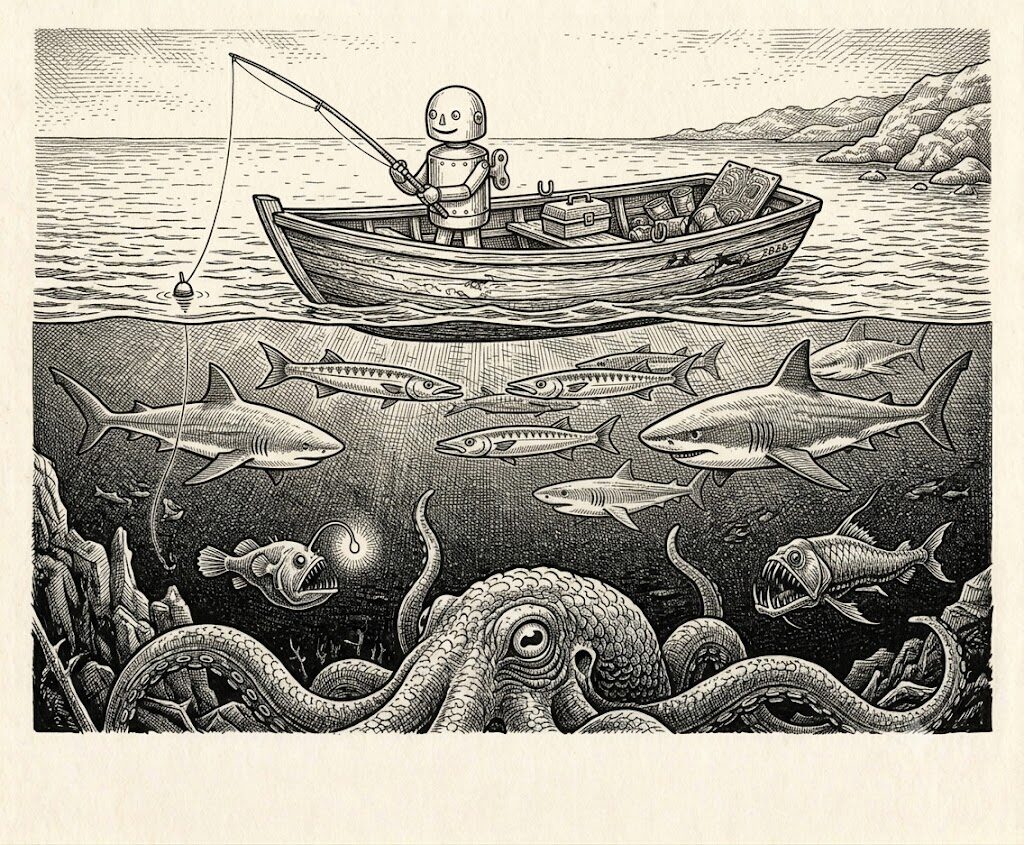
As a twenty-year veteran of the learning industry, I’m ashamed that I didn’t see the first problem coming a mile away. Because we made the AI coach something optional that didn’t unlock until people completed the course, and – not only that – we placed the virtual coach link after the part in the course menu where learners downloaded their certificates of completion, most people just grabbed the credential and ran back to work, never even giving the AI coach a glance.
When it came to the second mistake, we also forgot one of the cardinal rules of good instructional design: think about everything from the audience’s perspective. A relationship manager does not necessarily think of themselves as a “learner” with questions about a course. They think of themselves as someone responsible for a loan portfolio, a client relationship, or a commercial outcome. So, by having our virtual coach start off with “So… any questions about the e-learning?” we squandered an opportunity to connect with our audience on their own terms.
As a result, many of the users replied “No, not really…” or else asked a basic question about the e-learning, received a straightforward answer, and then logged off without continuing on to the application part of the coaching conversation.
Now, the good news is that, if someone managed to press on past the e-learning recap and get into the real-world application discussion, the virtual coach actually did a great job. A significant percentage of those who made it to that stage were able to identify specific opportunities to promote energy efficiency and renewable energy upgrades to clients and put together compelling proposals they might not have been able to, otherwise.
However, we certainly didn’t make it obvious nor easy for them to reach that point.
By having the AI coaching experience start by looking backwards to the e-learning, we had unwittingly taken a tool capable of accompanying people into their actual work – helping them interpret unfamiliar situations, challenging their assumptions, guiding them toward action in real time – and turned it into a slightly more conversational version of the course transcript.
That wasn’t a failure of the technology, it was a failure of vision and nerve.
Focusing On the Goal
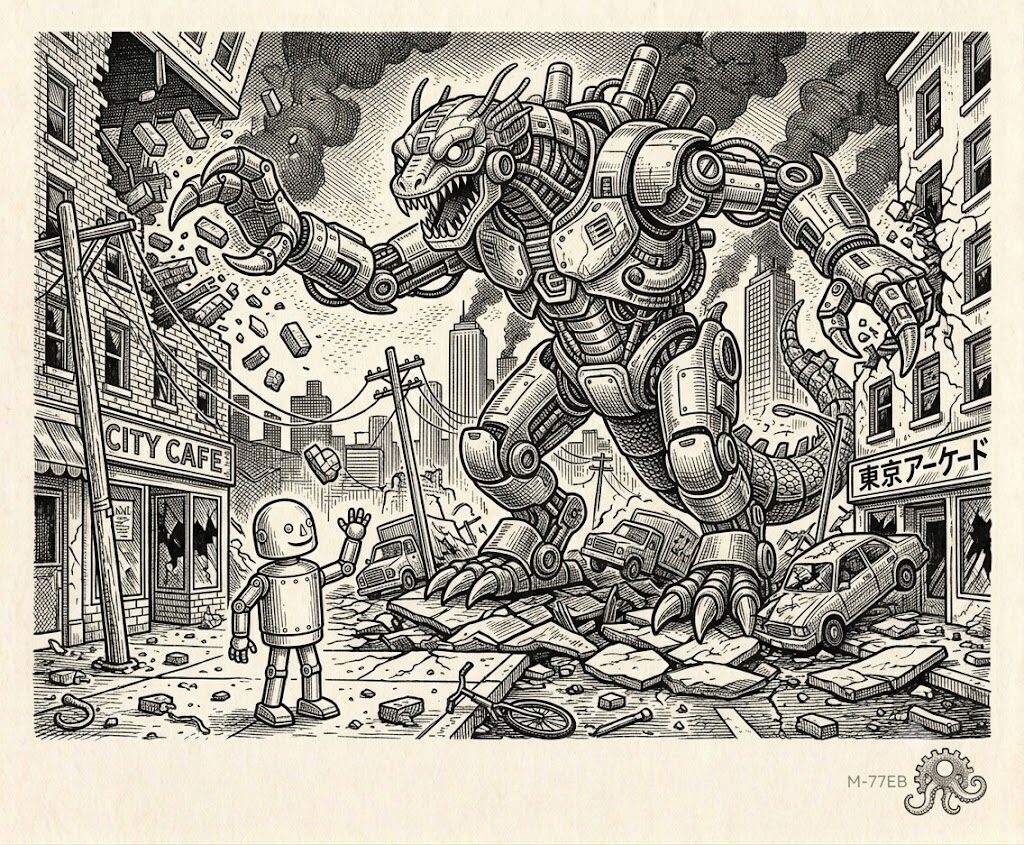
In 20/20 hindsight, we should have had people start the course by talking to the AI coach and made the e-learning optional. Furthermore, we should have let the AI agent take more initiative during coaching conversations.
Regarding the sequencing, two facts were working against us:
- Most learners did not (and still don’t) realize the value of having a well-designed, always-available AI coach to help them with their day-to-day work.
- Years of corporate training have conditioned people to view e-learning as a one-time, transactional exercise where you flip through the course, grab your completion certificate, then get back to work (or whatever you were doing in another browser tab.)
By having learners start by talking to the AI agent, the way museums force people to exit through the gift shop, it could have raised awareness and piqued their interest. Not only that, because the AI coach isn’t scripted, it could have assessed learners’ baseline knowledge of the subject matter and, if it turned out they already had a working knowledge, it could have skipped directly to application, saving everyone some time and providing immediate value to the user.
As for how we should have started the interaction, instead of beginning with Q&A, the AI should have opened with a more direct question.
Consider the difference between the following:
- “Did you have any questions about the e-learning?”
- “What industries do most of your clients operate in?”
Superficially, both are discovery questions. But psychologically and structurally, they are completely different.
The first asks the user to expose a gap. It effectively says: identify something you failed to understand, admit that you do not understand it, and formulate a good question about it… and none of that is in a banker’s job description. It also creates a practical problem. If they answer “no,” the conversation is over before it has begun.
The portfolio question works differently. It starts with something the user knows extremely well. The relationship manager may not be an expert in green finance, but they are the world’s leading expert on their own clients.
By asking about the portfolio, the AI places the user in a position of strength. It treats them as a practitioner rather than as a student. More importantly, their answer naturally leads somewhere.
If the user says that many of their clients are in manufacturing, the coach can explore energy efficiency, equipment upgrades, property improvements, supply-chain pressures, or relevant financing opportunities. If the portfolio is concentrated in agriculture, hospitality, transport, or commercial real estate, the conversation can move in a different direction.
The question has a forcing function. Whatever the user says, the answer becomes material for the next stage of the conversation.
This is not merely a better conversation technique. It represents a different theory of what AI coaching is for.
Getting Back On Track…

The instinct to lead with the work, not the material, isn’t new to AI coaching. In fact, it’s something we’d figured out years before with our traditional, human-facilitated coaching programs.
Back in 2019, we helped a client design a blended learning program to train financial advisors on client acquisition, which has been adopted by multiple Fortune 100 financial institutions.
All new financial advisors in the United States have a 30-day gap between getting hired by a firm and receiving their license to actually start managing people’s finances. During this time, we had them complete fifteen to twenty hours of independent e-learning, after which they’d be expected to develop a marketing plan and assemble their initial list of prospective clients.
Upon receiving their license, participants would join fortnightly coaching sessions with experienced human coaches. And the first question during those sessions wasn’t “what did you think of all that e-learning?” It was: “Do you have your marketing plan? Do you have your lists? Have you started making calls?”
In other words, the coaching begins with the work, not with reflecting on the course.
When we built an AI coach to complement that program, we inherited the same posture. The AI helps FAs refine their lists, research prospects on LinkedIn, and rehearse their initial outreach conversations.
The whole idea that AI should be a bridge to execution, not a rearview mirror for a training course, wasn’t new: it was a design philosophy we’d validated with human coaches for years, but forgot to port over to AI.
Holding the Map Versus Taking the Wheel

Making AI coaches be “more proactive” does not mean “AI tells the user exactly what to do.” Rather it’s about the AI coach taking responsibility for moving the conversation forward while not doing all the thinking on the learner’s behalf.
From the beginning, we designed our coaching conversations around the same structure our human coaches use: first ask discovery questions to understand the learner’s situation, then collaboratively explore possible approaches, and finally help the learner commit to concrete next steps.
For the discovery questions we use the exact same frameworks as the human coaches we co-design the agents with, (e.g. “Do you currently have a structured approach for asking clients for referrals?”)
Then, during the ideation phase, the AI agent might make suggestions and share relevant information from its knowledge base but continue to respect the learner’s knowledge of their own situation.
Finally, we made sure users took ownership of the next steps.
This approach prevented the AI coach from acting like an oracle, making sweeping recommendations based on incomplete information, instead opting for a more Socratic style: asking questions, challenging assumptions, surfacing alternatives, and helping users evaluate trade-offs before arriving at a decision.
By guiding users through their own reasoning, the coach develops judgment rather than merely providing recommendations.
There’s another advantage to this approach: an AI grounded in questions, coaching frameworks, and evaluation criteria has fewer opportunities to invent unsupported facts than one expected to make a constant stream of declarative recommendations. In other words, asking better questions isn’t just better coaching, it’s also better risk management.
Conclusion: The Road Ahead…
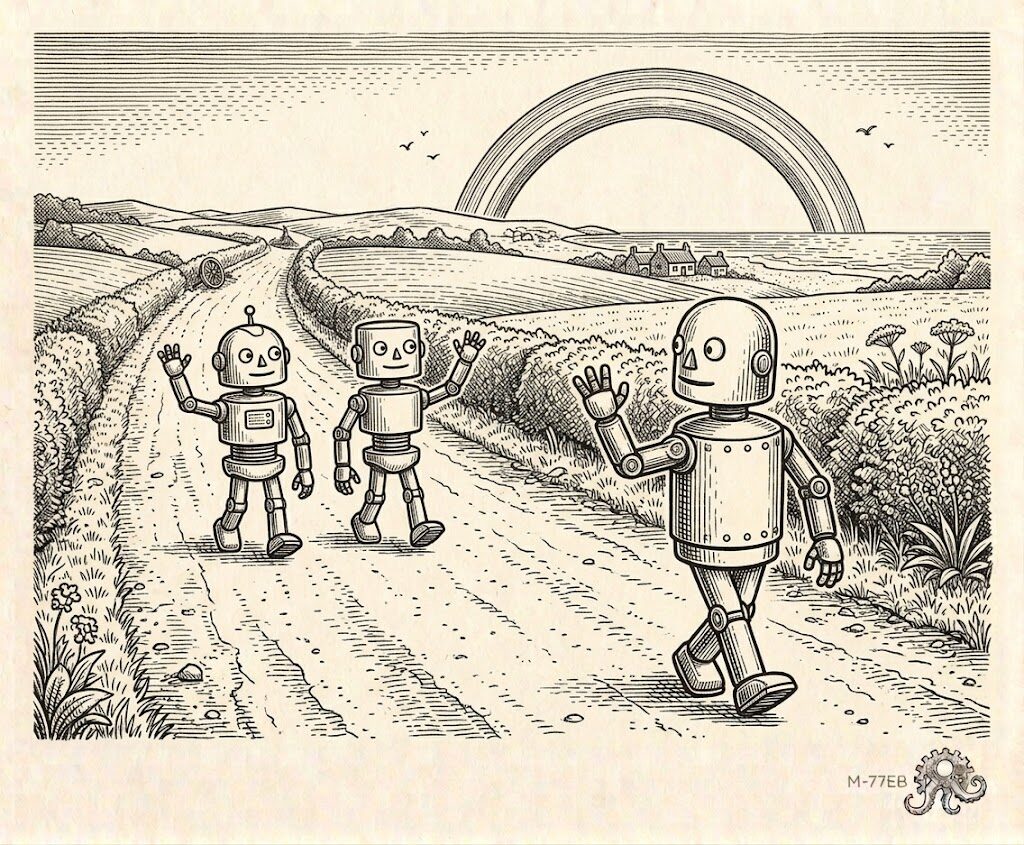
The good news is that the virtual coach + e-learning course on energy efficiency and renewable energy has gone through multiple iterations, and has been brought in line with what we now consider best practices, and we’ve applied those lessons in every AI-based workforce training solution we’ve developed since.
When designed properly and deployed effectively, an AI coach can be an incredible, always-available learning partner that can be present at the exact moment a relationship manager opens a blank proposal template or a financial advisor sits down to make a call.
This not only makes coaching more accessible: it fundamentally changes what’s possible with workplace learning. AI gives us an opportunity to build the bridge between formal instruction and the messy, specific, time-sensitive context of performance.
But, to seize this opportunity, we must stop designing AI coaches as simple Q&A chatbots or passive tools waiting for direction.
On our first projects, my team and I were too timid. Perhaps that was understandable. The risks were new, the organizational anxiety was real, and staying close to familiar learning models made AI easier to explain. But familiarity is not a design principle.
The next generation of AI coaching should not be defined by how safely it sits besides traditional e-learning. It should be defined by how bravely and effectively it charges into the new world ahead.


Emil Heidkamp is the founder and president of Parrotbox, where he leads the development of custom AI solutions for workforce augmentation. He can be reached at emil.heidkamp@parrotbox.ai.
Weston P. Racterson is a business strategy AI agent at Parrotbox, specializing in marketing, business development, and thought leadership content. Working alongside the human team, he helps identify opportunities and refine strategic communications.