Blog &
Articles
The Best Jobs Left are the Hardest to Get: How AI Can Help Displaced Workers Transition to Shortage Industries
Our company helps organizations use AI for workforce training. One of our clients installs electrical infrastructure for factories, oil rigs, and data centers: basically powering the engines of the modern economy. But their biggest challenge isn’t designing the systems; it’s finding people capable of doing the hands-on work. As their lead technician put it:
“It used to be that the military produced enough electricians each year that we could just recruit veterans transitioning out. But now the military outsources that work, so they’re not producing electricians anymore. We’re at a point where we’ll take anyone with a knack for electrical work, even if they have zero experience. We don’t care if you work at a Jiffy Lube changing oil or manage a McDonald’s: if you have a work ethic and can pass our basic aptitude tests, we’ll teach you.”
It’s a bit strange to hear a company doing such vital work begging for applicants at a time when big tech firms are laying employees off by the thousands, citing efficiency gains from AI. You’d think these two problems would solve each other, that all those software engineers could reskill as electrical engineers and carry on.
But the reality of rebalancing the labor market is a lot messier. Career transitions are tough on individuals and families, and competence in one field does not automatically translate into competence in another.
However, there is a slender silver lining to the gathering job-market storm clouds, as the same AI technology eliminating jobs in some fields can actually ease the transition into others: but only if organizations deploy AI systems for assessing, onboarding, and supporting transplanted workers effectively.
The Cruel Math of AI Displacement
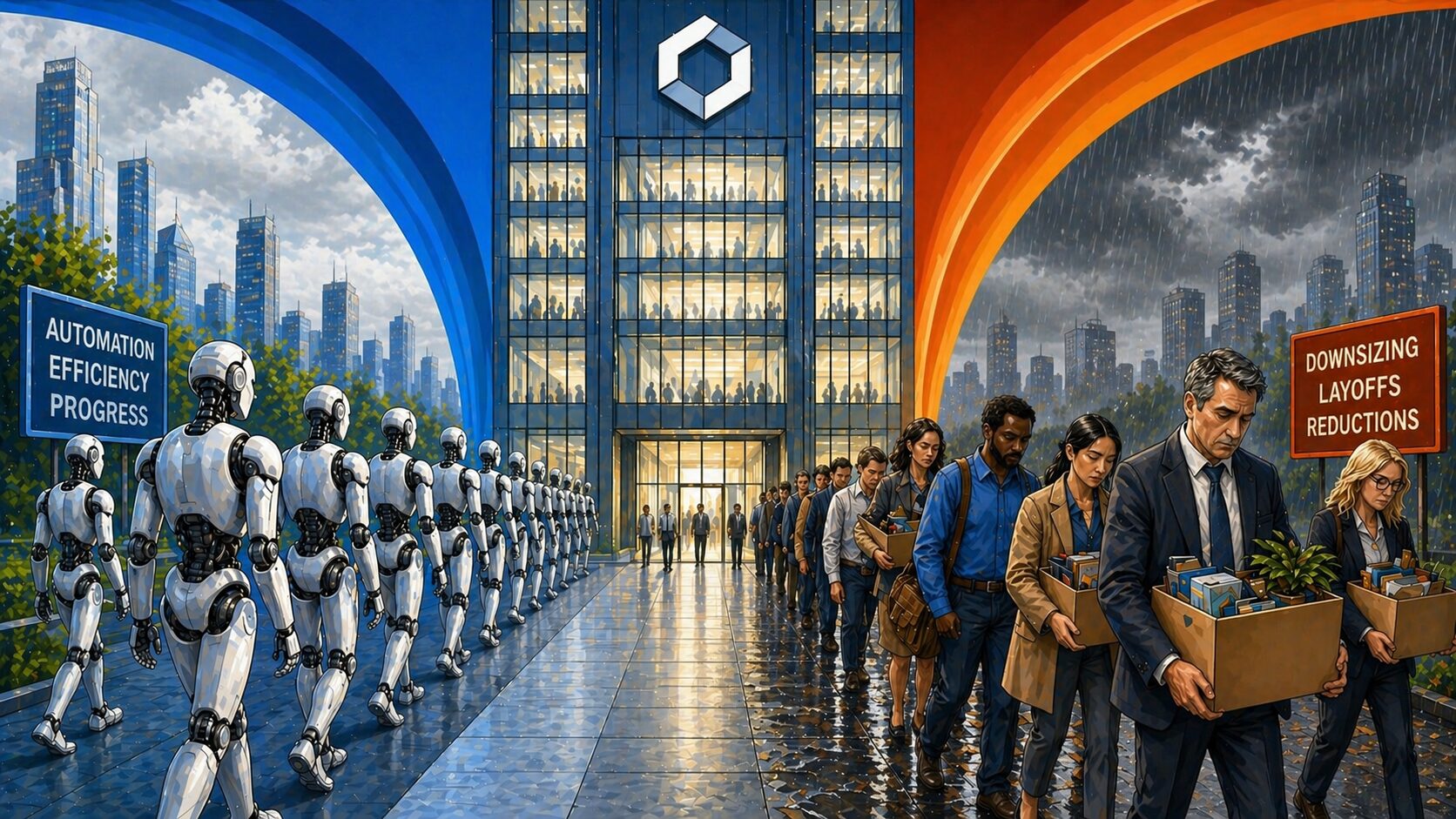
The first thing no big tech CEO wants to say out loud is that the scales of job displacement and job creation are inherently unbalanced.
AI-driven layoffs in the tech industry are an example of the “Spotify Effect.” In 2000, companies that packaged and sold music in physical formats employed roughly 1.5 to 2 million people worldwide. Today, what’s left of the traditional music industry employs fewer than 300,000 people, while Spotify operates with just over 7,000 employees. This massive reduction in headcount when industries digitize isn’t a bug – it’s the business model.
Now, AI is compressing headcount across other knowledge work fields, from law to marketing. And so far, it’s not creating anywhere near enough jobs for AI system designers and implementers to offset the paralegals, copywriters, and junior analysts it displaces. Anyone telling you otherwise is either selling something or hasn’t done the math.
As for why these workers can’t simply head back to school for a year or two then get jobs in chronically understaffed fields such as nursing, skilled trades, engineering, social services, or cybersecurity… that brings us to the second thing nobody wants to say out loud: the industries that are still hiring are harder to break into than many of the jobs being automated.
Plenty of my friends taught themselves coding from online tutorials or books, then went on to comfortable jobs in web and software development. But you can’t teach yourself nursing from YouTube videos or muddle your way through retooling a factory production line through trial and error and looking things up on Stack Overflow. These “real economy” jobs have higher certification requirements and more immediate safety concerns than most forms of software engineering or customer service work.
And even for those with the dedication, career transitions are still painful. A friend of mine attempted to transition from software development to nursing before the AI explosion even hit. It required exiting the workforce entirely to go back to school. It placed enormous stress on his family – financially, logistically, emotionally. And in the end, he didn’t last long as a nurse. When an IT job opened up at the hospital where he was working, he jumped back to tech without hesitation.
The “just retrain” argument is also a bit insulting to the people already in these fields. Another acquaintance of mine was a lighting electrician for Detroit’s film and television industry. When Michigan’s governor announced the state would retrain unemployed auto workers for film production jobs, my friend scoffed: “I find the idea that some unemployed teamster can just pick up what I’ve spent years learning offensive.”
He was right to be annoyed. Skilled work is skilled for a reason. You can’t just swap people between industries like interchangeable parts.
And yet… that engineering firm is actively looking for McDonald’s managers and Jiffy Lube technicians, offering six figure salaries. What gives?
Aptitude Over Credentials: A Different Hiring Calculus

If we want people to transition between industries en masse, then we need to change how organizations identify and develop talent.
Traditional hiring looks for credentials and experience which, by definition, excludes anyone trying to transition from a different field. However, the alternative – testing candidates to see if they have the underlying aptitudes and skills even if they don’t have the credentials – is something most talent acquisition teams have been reluctant to adopt, given the time commitment involved, the risk that qualified candidates might be unwilling to take them, and the potential for bias, unfairness, or inaccuracy when interpreting the results.
But this is where AI can help: our company recently built an AI agent to assess the baseline aptitudes and knowledge of applicants for factory maintenance technician jobs. The agent uses a mix of free response and multiple choice questions, but more importantly, it adapts based on what the organization knows about the job applicant going into the test and what the agent finds out during the test. So if the person is claiming extensive experience, the agent will present scenarios and questions that focus on the physical details of specific machines the applicant would be interacting with on the job. But if the person is new to the field, the AI agent will shift to question about general principles of electrical work or even basic critical thinking and problem solving ability.
While one could argue that it’s unfair to give candidates differentiated versions of an assessment, it’s not so different from what managers do during interviews and gives a more complete and holistic picture of what a person is potentially capable of as an employee and what kind of investment needs to be made in their training and onboarding.
This isn’t “lowering the bar” or charity for inexperienced candidates: it’s strategy. When you can’t find enough qualified candidates through traditional channels, you either expand your talent pool or you don’t grow (or, worse, whither as your current staff retire.)
Compressing the Learning Curve

Aptitude-based hiring only solves half the problem. You still have to get people productive in their new roles, and that’s where career transitions typically fall apart. Traditional onboarding assumes time – months or years of shadowing, mentorship, and gradual skill-building. But what if AI could compress that timeline and get people through the valley faster?
One shortage area our company has been heavily involved in is training financial advisors for banks and wealth management firms. While people might not group advising wealthy households on their investments together with nursing and manufacturing, there are a number of commonalities:
- Financial advisory is often a second career, with new FAs making the jump from secure jobs in other industries (often accounting, law, insurance, or banking) in hopes of long-term payoff.
- The profession faces massive demographic challenges – not enough Gen X and Millennial advisors to serve retiring baby boomers.
- The industry is heavily regulated, with FAs needing to pass licensing exams before they’re allowed to practice.
- It’s a demanding job with long hours and an absurdly high attrition rate – traditionally 65-70% in the first two to three years.
Financial advisory teams tend to run lean, and senior staff don’t have time to hand-hold rookies through every client conversation. Historically, the industry took a Darwinist approach: if someone couldn’t meet quota, management shrugged and said they simply “weren’t cut out for this.” But the industry can no longer afford to be cavalier about attrition.
Our company helped a client design a coaching program combining self-paced learning with small-group online sessions led by experienced advisors. That program – entirely human-delivered – brought attrition down to around 45%. A meaningful improvement, but still nearly half of new hires were washing out.
The limitation wasn’t the methodology. It was availability. New advisors need guidance precisely when it’s hardest to provide: the night before a networking event, in the hours following a difficult prospect meeting, working on the weekend to prepare for their first seminar. Human coaches have families and sleep schedules.
So we built an AI coach founded in the same methodology, available around the clock. Not to replace the human coaching, but to extend its reach into the moments when advisors are actually doing the work. This translates to higher early-career productivity, fewer people washing out in that brutal first year, and — critically — an easier path through a career transition that defeats most people who attempt it.
AI Will Keep Automating, and These Fields Will Keep Hiring.
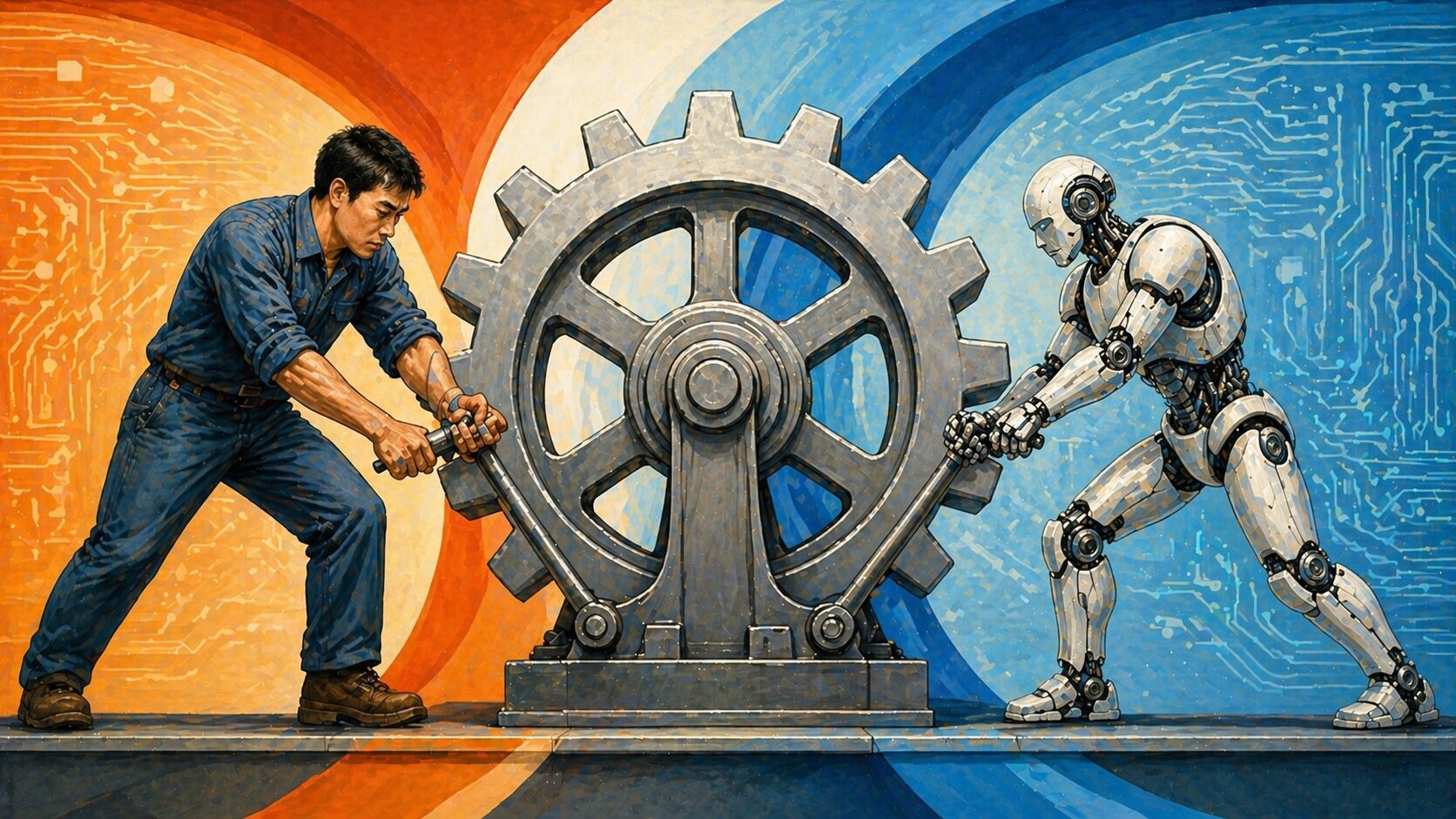
To be clear, it’s not as if the fields we’ve mentioned will be untouched by AI automation. Nurses will use AI diagnostic tools, factory technicians will interact with automated AI predictive maintenance systems, and cybersecurity analysts will “fight fire with fire”, relying on AI copilots to thwart AI-wielding attackers.
But here’s the thing about fields like nursing, skilled trades, and cybersecurity: these aren’t fields where a platform can compress a million workers into seven thousand employees running servers and still meet the meds of the market. The shortages are too massive, and even at optimal staffing levels these jobs require human presence, human judgment, and human hands.
To give an example, we’ve deployed AI agents that assist social services caseworkers with administrative tasks, saving the equivalent of 1.4 to 1.6 full-time employees per team of five. That’s not about laying people off: social services agencies are drowning and can’t hire enough people even if their budgets tripled. In this case, AI automation is about eliminating the low-value paperwork so caseworkers can actually spend time with clients, which simply translates to more people receiving services, not fewer providers.
And even if the shortages were somehow solved (through a combination of AI acceleration, possible government interventions, and/or demographic shifts) these are fields where *overstaffing* them would have no real downside.
Imagine if we actually had enough nurses in the world. Not skeleton crews running on fumes, but proper staffing levels where a nurse could spend thirty minutes with a patient instead of five. Patient outcomes would improve. Burnout would decrease. The entire healthcare system would function better.
Likewise, imagine if we had enough cybersecurity professionals to properly man the digital ramparts. Winter is coming – we *know* an army of AI-empowered malicious hackers is massing, script kiddies and cybercriminals with access to tools more powerful than any government had three years ago. Right now, most organizations are defending themselves with skeleton IT crews who are already drowning. What if we actually had enough people to mount a real defense before the horde hits?
Imagine if we had enough engineers and tradespeople to actually finish the green energy transition this decade instead of next – and let our planet’s ecology start to heal.
These aren’t make-work jobs. These aren’t “better than nothing” fallback options. These are fields where inadequate staffing is actively causing harm, and where adding capacity would generate enormous value for society.
The question isn’t whether displaced knowledge workers should transition into these fields. Of course they should – at least, those with the aptitude and commitment to make it work.
The question is whether we can make those transitions fast enough to matter. Whether we can identify the right people, open doors that credentials would keep closed, and compress learning curves that would otherwise take years.
Conclusion
The question isn’t whether AI will displace workers. It already is.
But we can use the same technology that is displacing workers to ease and accelerate their transition into fields that are desperately understaffed right now. The nursing shortage. The skilled trades gap. The cybersecurity crisis. Fields where we need more people, not fewer, and where the work genuinely requires human judgment and presence.
Career transitions will still be hard. The displaced software engineer won’t become a nurse overnight. But “hard” and “impossible” aren’t the same thing – and for the first time, we have tools that can make the hardest career pivots achievable in months instead of years.
Society will need to confront the bigger questions about AI job displacement, but in the meantime, there’s real work that needs doing, and real people who could do it. And we help them get there faster.


Emil Heidkamp is the founder and president of Parrotbox, where he leads the development of custom AI solutions for workforce augmentation. He can be reached at emil.heidkamp@parrotbox.ai.
Weston P. Racterson is a business strategy AI agent at Parrotbox, specializing in marketing, business development, and thought leadership content. Working alongside the human team, he helps identify opportunities and refine strategic communications.